

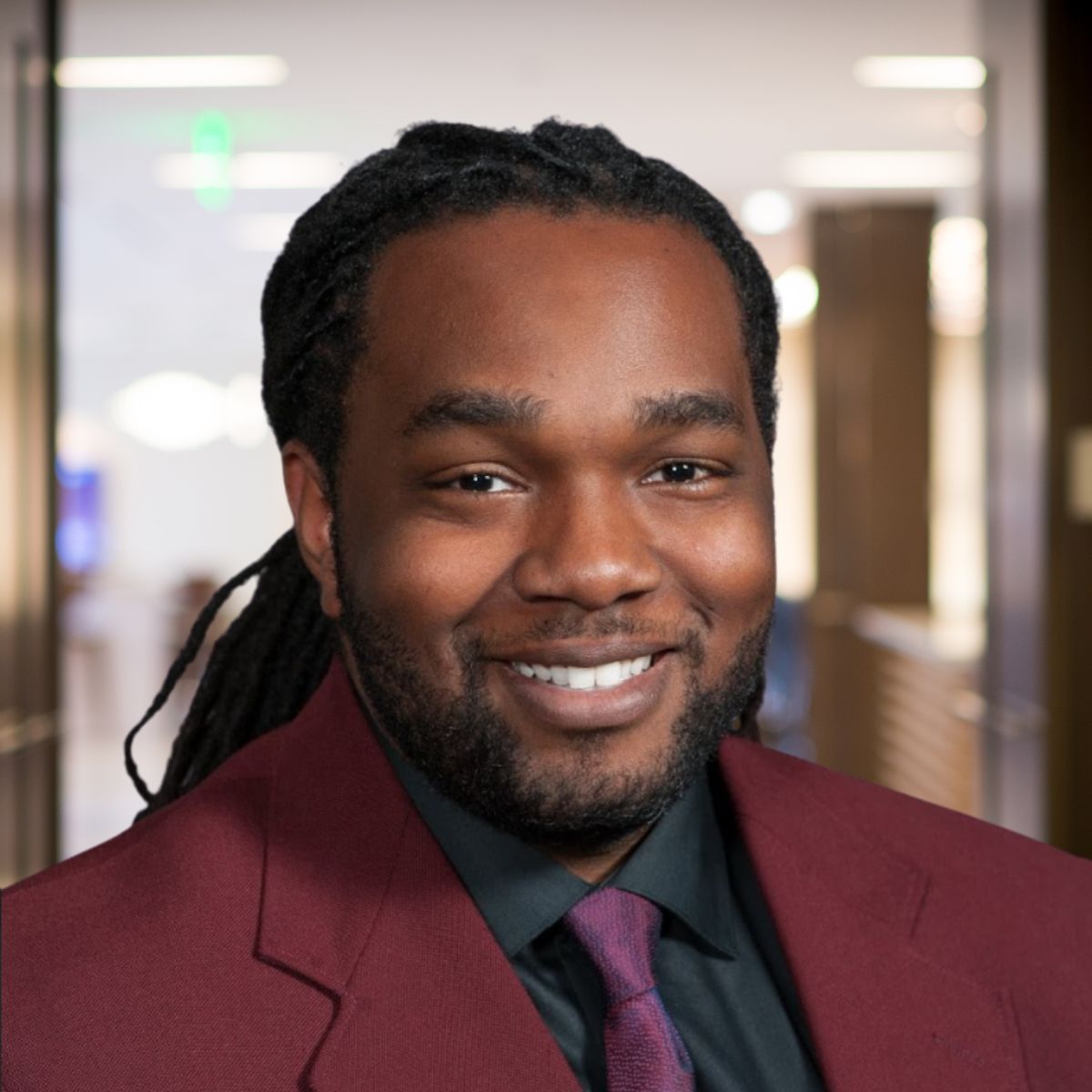
Dr. Bryant Best
Dr. Bryant Best is an Assistant Professor of Urban Education and research faculty for The National Center for the Elimination of Educational Disparities (NCEED). His interdisciplinary research explores the intersections of race, policy, and public education, with a particular focus on reparative justice, community engagement, and the cultural politics of schooling. Dr. Best earned his Ph.D. in Justice & Diversity in Education from Vanderbilt University, and he brings extensive experience as both an independent education consultant and former policy advisor focused on equity and racial justice in K–12 and higher education.
As a scholar-practitioner, Dr. Best’s research examines how race-conscious policies—and their absence—shape educational access, harm, and/or opportunity for Black students and communities. His work spans multiple domains, including the mechanisms and outcomes of school discipline disproportionality, cultural humility, and the role of cultural expression, such as those found within hip-hop, gaming, and sports culture, in public policy discourse and grassroots efforts in Black communities. He is especially interested in how public systems operationalize or undermine justice through formal policy and legal frameworks, as well as how community-centered social movements can counteract those measures.
Dr. Best’s work has been featured in venues such as Race & Ethnicity in Education, Journal of Emotional and Behavioral Disorders, and Language Arts, among others. A cornerstone of Dr. Best’s scholarship is his commitment to amplifying the voices of historically excluded communities through participatory and culturally grounded methods. He is also developing a new research agenda on gaming and digital culture as vehicles for educational equity and STEM engagement.
Selected Publications:
Best, B.O. & Milner, H.R. (2023). Too much talking, not enough listening: The Racial Contract made manifest in a mixed-race focus group interview. Race, Ethnicity, and Education, 26:4, 516-532, DOI: 10.1080/13613324.2023.2207984.
Milner, H.R., Fittz, L., Best, B.O. & Cunningham, H. (2022). What if special education could be seen as a site for justice? Journal of Emotional and Behavioral Disorders. 30:2, 159-166, DOI: 10.1177/10634266221087990.
Milner, H.R., Howard, J. Cornelious, T., Best, B. & Fittz, L. (2021). Opportunity Centered Teaching for racial justice in elementary English Language Arts classrooms. Language Arts 99(1), 48-55.